SEM image characterization
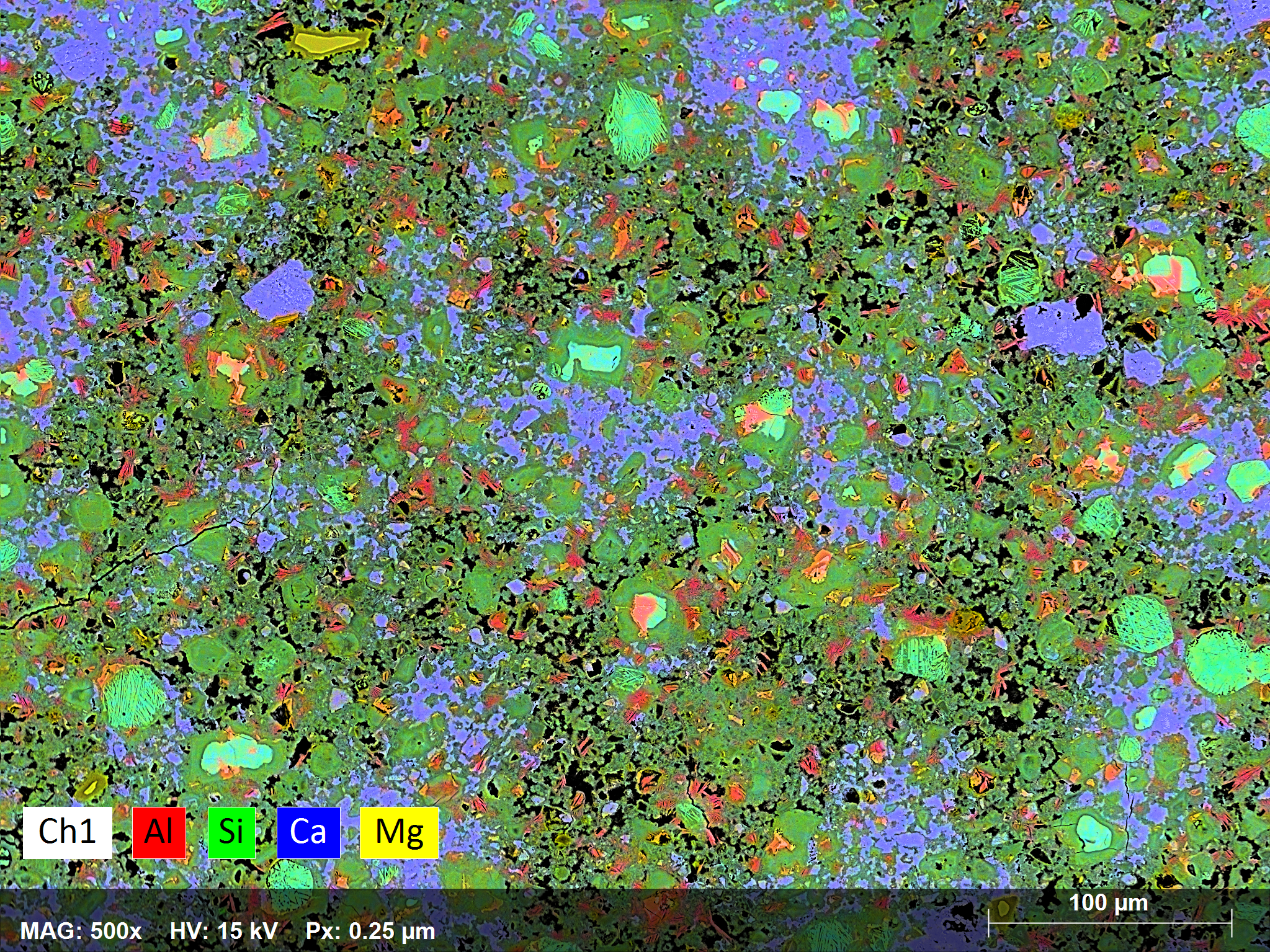
QMap Worflow
Measuring the surface area of your SCM allows you to compute its degree of reaction. Clusters its segments based on chemical compositions.
Input: a SEM-BSE + SEM-EDX colored image + SEM-EDX stacks of atomic/weight % files.
Output: Segmented Image and Surface Area of the SCM.
RGB Workflow
Measuring the surface area of your SCM allows you to compute its degree of reaction. This assumes the SCM is easily visible by eye and and cluster its segments based on color only.
Input: a SEM-BSE + SEM-EDX colored image (but not atomic/weight % files).
Output: Segmented Image and Surface Area of the SCM.
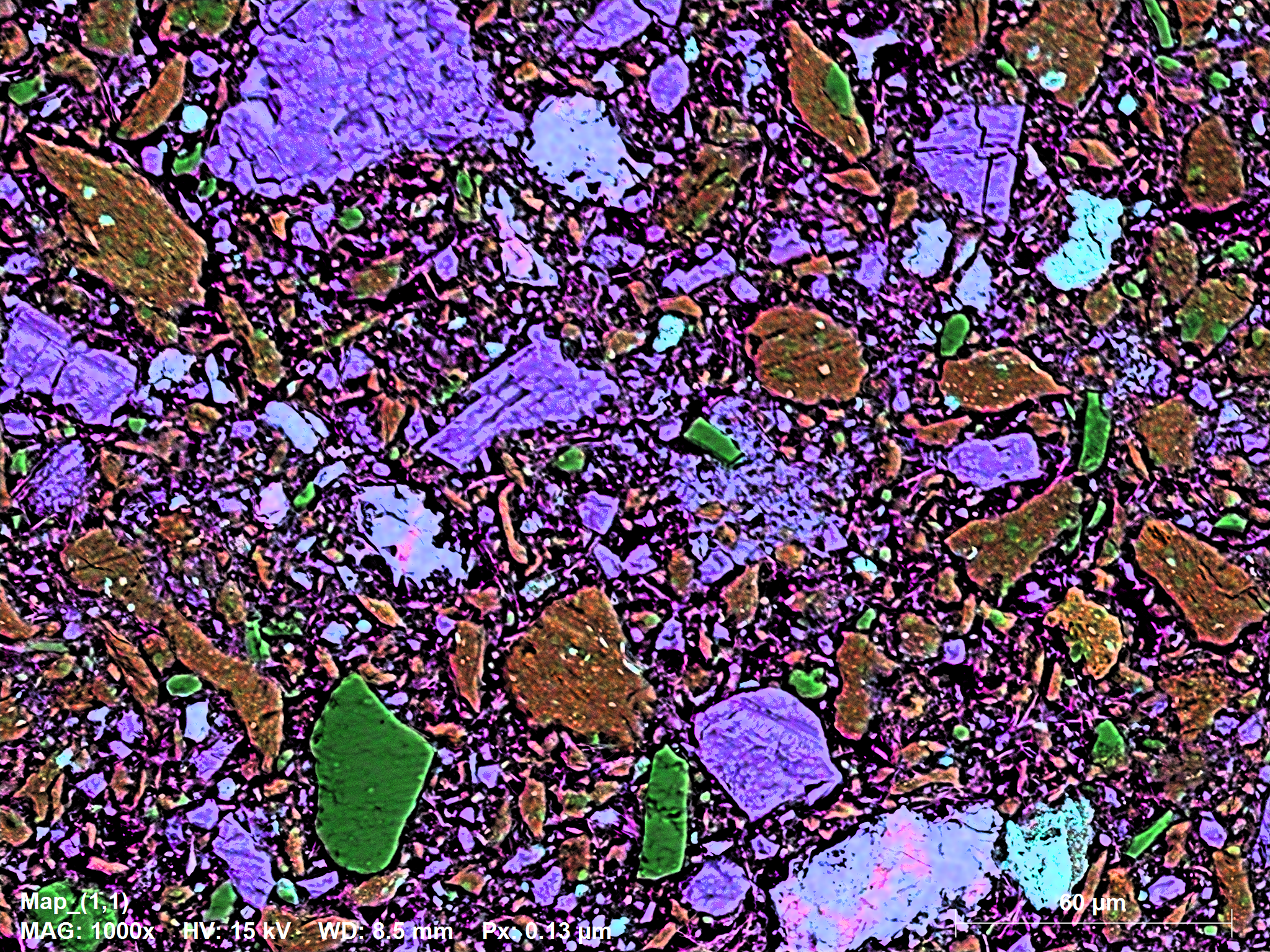
Calcined Clay Degree of Reaction
Measure the surface area of your reacting calcined clays in cement paste and cluster its segments based on chemical compositions(not just color).
Input: a SEM-BSE + stacks of atomic/weight % files.
Output: Segmented Image and Surface Area of the SCM.
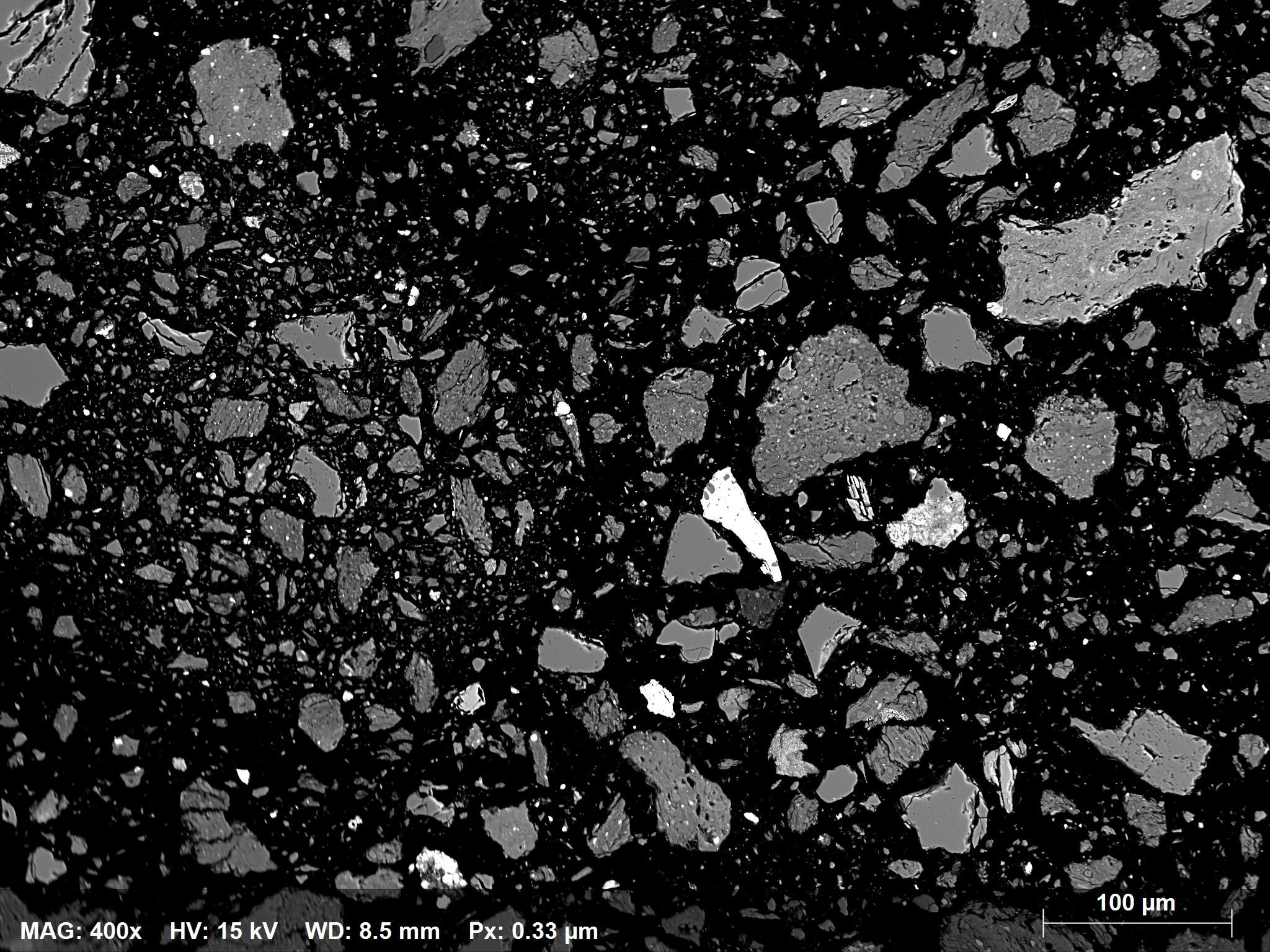
Particle Size and Shape Distribution of Powder
Acquire an SEM-BSE image of your powder or sand and get its PSSD and equivalent surface area.
Input: A BSE image file of an impregnated powder.
Output: PSSD plots from which Dv50, aspect ratio, and surface roughness can be directly read.